Applied Generative AI & Agentic AI
Move beyond basic API calls. Master transformer internals, LangGraph multi-agent state machines, hybrid dense-sparse vector retrieval, parameter-efficient fine-tuning (LoRA/QLoRA), and enterprise vLLM deployment with safety guardrails.
Get Expert Course Guidance
Speak with a Principal Architect & get a customized roadmap, syllabus, and 0% EMI plans.
The Shift from Simple Prompting to Autonomous Enterprise AI
Modern organizations are not looking for chatbot wrappers. They need architects capable of designing fault-tolerant, deterministic multi-agent architectures that execute complex multi-step workflows with audited precision.
Enterprise Challenges in 2026
Deploying generative models in production introduces significant architectural obstacles that toy tutorials never address:
- Hallucinations & Drift: Preventing generative deviations in mission-critical corporate workloads.
- Multi-Agent Loops: Orchestrating complex state graphs without infinite cycles or state corruption.
- Compute & Latency Cost: Serving high-throughput models under 150ms while optimizing GPU memory.
What You Will Engineer
This specialization delivers production-hardened capabilities across the full modern GenAI tech stack:
- Graph-Based Workflows: Build complex state machines using LangGraph, Autogen, and CrewAI.
- Advanced RAG: Implement metadata filtering, recursive chunking, re-ranking, and self-reflection loops.
- Model Adaptation: Fine-tune open weights using LoRA and QLoRA on customized domain data.
Industry Aligned Curriculum
Designed in collaboration with enterprise AI directors. Every module contains conceptual foundations, live coding labs, and a production-grade live project.
Foundation Models, Transformer Architecture & Prompt Engineering
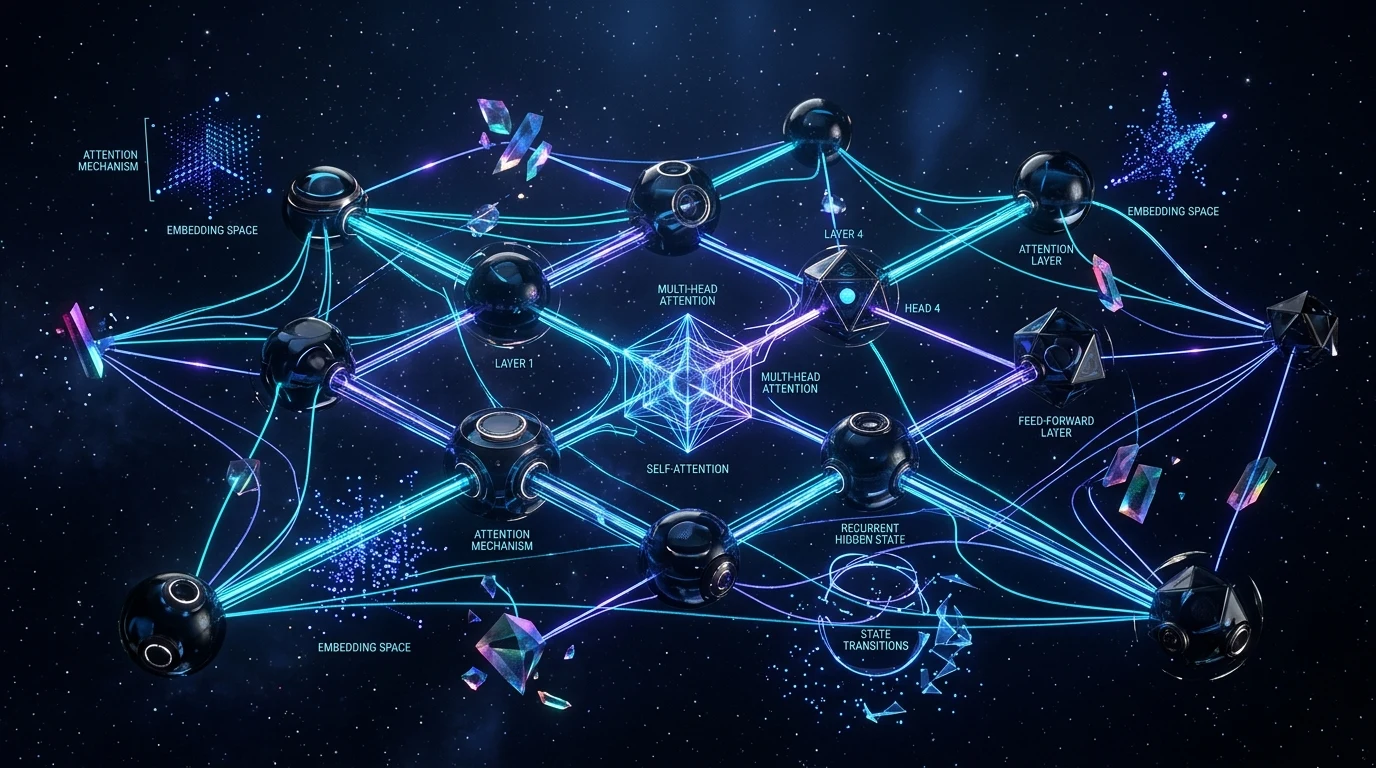
- Self-Attention & Multi-Head Attention mechanics
- Positional encodings (RoPE, ALiBi)
- Tokenization algorithms (BPE, WordPiece, SentencePiece)
- Chain-of-Thought (CoT) & Tree-of-Thoughts (ToT)
- Directional stimulus prompting & ReAct principles
- Structured JSON output enforcement with Pydantic
- Dense vs. sparse embedding mathematical foundations
- Similarity metrics: Cosine, Dot Product, Manhattan
- Dimensionality reduction and embedding clustering
Enterprise Retrieval-Augmented Generation (Advanced RAG)
- HNSW vs. IVF-PQ index performance optimization
- Enterprise setups with Milvus, Qdrant & Pinecone
- Metadata payload indexing and partitioned filtering
- BM25 keyword search combined with dense vectors
- Reciprocal Rank Fusion (RRF) algorithms
- Cross-Encoder Re-Ranking (Cohere, BGE-Reranker)
- Self-RAG: Retrieval reflection and grading nodes
- Query decomposition & sub-question generation
- Automated pipeline evaluation using Ragas & TruLens
Autonomous Multi-Agent Networks & LangGraph State Machines
- StateGraph definition with conditional routing
- Cyclic decision loops and fallback checkpoints
- Persistence layers & human-in-the-loop approvals
- Hierarchical Supervisor vs. Peer Collaboration models
- CrewAI role delegation and sequential execution
- Shared memory buffers and distributed context windows
- OpenAPI tool binding and dynamic function calling
- Docker-isolated code execution sandboxes
- Safe exception handling and self-correcting retries
Model Fine-Tuning (LoRA/QLoRA), vLLM Serving & Enterprise LLMOps
- Low-Rank Adaptation (LoRA) matrix mechanics
- 4-bit NF4 Quantization & QLoRA memory reduction
- Unsloth acceleration & gradient accumulation tuning
- vLLM architecture: PagedAttention & continuous batching
- Tensor Parallelism across multiple GPU nodes
- Dynamic adapter hot-swapping under single host
- NeMo Guardrails & Llama Guard safety policies
- Prometheus & Grafana monitoring for tokens/sec & latency
- Cost governance, semantic caching & rate limiting
Enterprise-Grade Major Live Projects
You do not build toy demo apps. You engineer production architectures solving real enterprise business challenges.
Autonomous Financial Research & Regulatory Audit Agent
Engineered with LangGraph and Milvus. Crawls real-time earnings calls, parses SEC 10-K tables, executes verification calculations via Python sandbox, and cross-references regulatory mandates with 100% cited footnotes.
Self-Correcting Clinical Decision Support RAG Pipeline
Multi-stage hybrid retrieval engine matching PubMed clinical trials and EHR documentation. Employs cross-encoder re-ranking, Hallucination-Grading LLM nodes, and NeMo Guardrail policies to ensure safety compliance.
Domain-Specific Code Synthesis Assistant with QLoRA
Fine-tuned open-source model (Llama-3-8B) on proprietary API SDKs. Deployed on an isolated cloud instance utilizing vLLM with PagedAttention and latency instrumentation to maintain under 90ms first-token latency.
Production Tools You Will Master
Direct hands-on experience with the dominant foundation models, orchestration frameworks, and vector infrastructure powering top AI teams.
Designed for Engineers Stepping into AI Leadership
This curriculum is structured for software professionals who already write code and want to transition to advanced AI systems engineering.
Transitioning to AI Systems Engineer
Leverage your distributed systems, API, and database background to build high-scale GenAI backend architectures and multi-agent services.
Advancing to Generative AI Architect
Upgrade beyond tabular models and classic ML to master large language model fine-tuning, vector retrieval topologies, and agent state machines.
Leading Enterprise AI Transformation
Acquire the architectural vocabulary, security guardrail frameworks, and cost-optimization principles required to direct high-stakes AI roadmaps.
Apply for Upcoming 2026 Batch
Complete your evaluation details below. An admissions advisor will connect with you within 15 minutes with the full curriculum kit and batch schedule.
Find Your Preferred Learning Location
Explore verified training hubs across Delhi NCR and India's prime tech corridors offering interactive live mentor labs, classroom options, and dedicated career placement support.
Frequently Asked Questions
Clear, direct answers regarding eligibility, lab environments, and career assistance.